 HORRID
“Dear creature! How much I am obliged to you; and when you have finished Udolpho, we will read the Italian together; and I have made out a list of ten or twelve more of the same kind for you.”
“Have you, indeed! How glad I am! What are they all?”
“I will read you their names directly; here they are, in my pocketbook. Castle of Wolfenbach, Clermont, Mysterious Warnings, Necromancer of the Black Forest, Midnight Bell, Orphan of the Rhine, and Horrid Mysteries. Those will last us some time.”
“Yes, pretty well; but are they all horrid, are you sure they are all horrid?” Isabella Thorpe & Catherine Morland, Northanger Abbey, Chapter 6
 This list of Gothic novels that Isabella Thorpe has so expertly compiled and presented to our heroine Catherine Morland is the so called ‘Northanger Canon’. It consists of the the 7 novels on Isabella’s list, and two that are previously read by Catherine and Isabella during the novel; – – The Mysteries of Udolpho and The Italian. These late 18th-century Gothic novels represent the most popularly sensational and ‘horrid’ of the genre, in Isabella’s influential opinion, and worthy of her young protege’s perusal. The complete list is as follows…
-
The Mysteries of Udolpho, by Ann Radcliffe (1794)
-
The Italian, by Ann Radcliffee (1796)
-
The Castle of Wolfenbach, by Eliza Parsons (1793)
-
The Mysterious Warning, a German Tale , by Eliza Parsons (1796)
-
The Necromancer: or, The Tale of the Black Forest, by Carl Friedrich Kalhert (1794)
-
Horrid Mysteries, Marquis de Grosse (1796)
-
Orphan of the Rhine, by Eleanor Sleath (1798)
-
Clermont, a Tale, by Regina Maria Roche (1798)
-
The Midnight Bell, by Francis Lathom (1798)
 This renown Gothic ‘classics’ list is quite famous in the Jane Austen community. It is believed to represent Austen’s own choice of the best and darkest of the genre, her support of novel reading in general, and an ironic warning of their influence by parodying them in her novel Northanger Abbey. In the post Sublime Anxiety: The Northanger Canon, at Old Grey Pony, you will be interested to learn further about the Gothic canon, and Jane Austen’s interest in them.
Austen herself enjoyed Gothic fiction, especially the work of Ann Radcliffe, but she feared that the excessive romanticism and melodrama of the books incited impressionable girls to ape the manners, coquetry and faux sentimentality of a Gothic heroine, in search of the exciting adventures they found on the page. Seeking the danger and intrigue of a novel in their everyday lives could not but breed insincerity and vanity, and in Northanger, she gives us the portrait of just such a girl in Isabella Thorpe.
 This is so insightful. I have often felt that Isabella Thorpe and her brother John are portrayed a bit out of step with proper social behaviour of the time in Northanger Abbey. Isabella is so animated in her dialogue, with her endearments and euphemisms such as “psha nonsense“, “my sweet love“, and “my dear creature“. This was Jane Austen’s way by example of showing gentle readers the affects of what ‘too’ much horrid Gothic can be on a young girl’s impressionable mind! Hah!
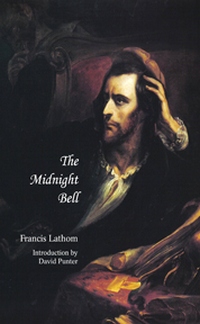 If you are curious as I am about how these Gothic novels influenced Jane Austen’s writing of Northanger Abbey, you will be interested to know that the good people at Mollands will be having group read of The Midnight Bell, by Francis Lathom, starting in mid January. You can read about the book and the group read at this post on Austenblog. Check back there for an update on the start date. It is surely to be a lively and horrid discussion, so please join it!
*Image of the front cover of the Cambridge Campanion to Gothic Fiction, edited by Jerrold E. Hogle, published by Cambridge Univeristy Press, (2002)
Discover more from Austenprose
Subscribe to get the latest posts sent to your email.

Fabulous list of books. Thanks for sharing!!
LikeLike
Thanks for the post. I’ve just finished Northanger Abbey and was really surprised to find it’s the springboard to a recent bestseller, Ian McEwan’s Atonement.
LikeLike
Hi Arti, I did not know that Atonement was inspired by NA. I saw the movie last week and really enjoyed it. I was so impressed with many aspects of the movie. I did not see any plot or character similarities. Could you let me know what I missed? Cheers, Laurel Ann
LikeLike
I’ve written a review on both book and film of Atonement, you may like to stop by my blog. I can’t say whether it’s inspired by NA, but the idea in NA is definitely a springboard to the story.
LikeLike
Thanks Arti, for pointing out the reference. It is an interesting connection. Possibly the author used it as an echo of what was to come in the novel. Thanks for visiting, Cheers, Laurel Ann
LikeLike
Yes, a most interesting connection …and you’re right, a foreshadowing of things to come. The quote is like a preface, printed on a separate page before the first chapter begins.
Thanks for stopping by and I’ve just added you in my blogroll. Cheers, Arti.
LikeLike