Inquiring reader Lily recently wrote to me and expressed her frustration at not being able to locate the publication dates of Jane Austen’s minor works online. Ever the accommodating Janeite, here is a partial list of her published works.
Novels: (c. 1794-1817)
- Sense and Sensibility: (30 October 1811) Thomas Egerton, Military Library (Whitehall, London)
- Pride and Prejudice: (28 January 1813) Thomas Egerton, Military Library (Whitehall, London)
- Mansfield Park: (July 1814) Thomas Egerton, Military Library (Whitehall, London)
- Emma: (December 1815) John Murray (London)
- Northanger Abbey: (December 1817) John Murray (London)
- Persuasion: (December 1817) John Murray (London)
Juvenilia: (c. 1787-98) Three manuscript notebooks containing 27 items.
Volume the First (c. 1787-90) was first edited by R. W. Chapman and published by Clarendon Press, Oxford in 1933. It is now owned by the Bodleian Library, Oxford.
- Frederic & Elfredia
- Jack & Alice
- Edgar & Emma
- Henry & Eliza
- The adventures of Mr. Harley
- Sir William Mountague
- Memoirs of Mr. Clifford
- The Beautiful Cassandra
- Amelia Webster
- The Visit
- The Mystery
- The Three Sisters
- A beautiful description
- The generous Curate
- Ode to Pity
Volume the Second (c. 1790-93) was first published by Chatto & Windus in 1922. It is now owned by The British Museum.
- Love and Freindship (Austen’s original spelling of friendship)
- Lesley Castle
- The History of England
- A Collections of Letters
- The female philosopher
- The first Act of a Comedy
- A Letter from a Young Lady
- A Tour through Wales
- A Tale
Volume the Third (c. 1792) was first edited by R. W. Chapman and published by Clarendon Press, Oxford in 1951. It is now owned by The British Museum.
- Evelyn
- Catharine, or the Bower
Novella:
- Lady Susan: (c. 1793-4) was first published in part in A Memoir of Jane Austen, by James Edward Austen-Leigh in the second edition of 1871, and later, a full record of the manuscript alterations was edited by R. W. Chapman and included in the Oxford Press edition of 1923. The manuscript is now owned by The Pierpont Morgan Library, New York.
Fragments of Novels:
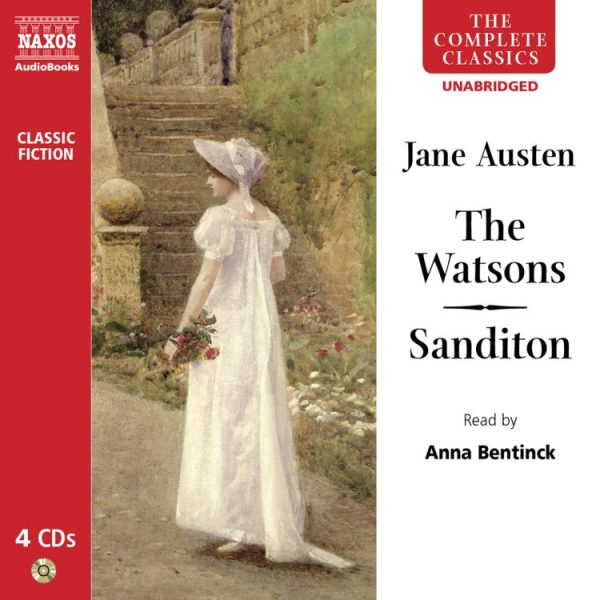
- The Watson’s: (c. 1804-5) was first was first published in part in A Memoir of Jane Austen, by James Edward Austen-Leigh in the second edition of 1871. The first six leaves of the manuscript were sold and later acquired by The Pierpont Morgan Library, New York. The remained of the manuscript (minus recently missing pages) was sold last year to The Bodleian Library, Oxford.
- Sanditon: (1817) an extract was first published (about one-sixth) in A Memoir of Jane Austen, by James Edward Austen-Leigh in the second edition of 1871. The manuscript is now owned by the King’s College Library, Cambridge.
You can visit digital images of many of the existing original Jane Austen manuscripts in her handwriting online at the awe inspiring website Jane Austen Fiction Manuscripts. Enjoy!
Cheers,
Laurel Ann
© 2007 – 2012 Laurel Ann Nattress, Austenprose


“One abandoned and the other uncompleted.” The Watsons and Sanditon may be fragments in Jane Austen’s literary canon, but they still deserve due deference. Composed over a decade apart in 1803-4 and 1817, each represents Austen’s desire to continue writing during two challenging times in her life. The Watsons was started when Jane was living in Bath with her parents and sister Cassandra. Raised at Steventon rectory in Hampshire, her father Rev. George Austen’s retirement from the clergy in 1801 prompted a relocation of his family to the resort town known for its healing waters and social activity. There she and her sister found a wider social circle, Assembly Balls, and other diversions but dearly missed the pleasures of the country, her large family and circle of friends that she was forced to leave behind. Her few remaining family letters during this period reflect her unhappy situation. Austen began Sanditon in 1817 during a brief remission in an illness that would ultimately take her life seven months later. Although gravely ill, the tone and freshness of the novel is comical and upbeat and reveals an evolution in style that displays her genius as a writer and an innovator of the British novel. We may never know why Jane Austen put The Watsons aside and did not return to it as she did with her other manuscripts. Moreover, her untimely death at age 41 parallels Sanditon’s abrupt halt after 12 chapters. They both fail to reach their full potential and it is our great loss and literature’s sad regret.